Buddhism
Buddhism is a religion of finding peace within oneself. It helps believers to find happiness and contentment that they seek.
Anna Truong
Places of Worship
It is not considered essential for believers of Buddhism to worship with others at any specific location. They can worship both at home or at a temple.
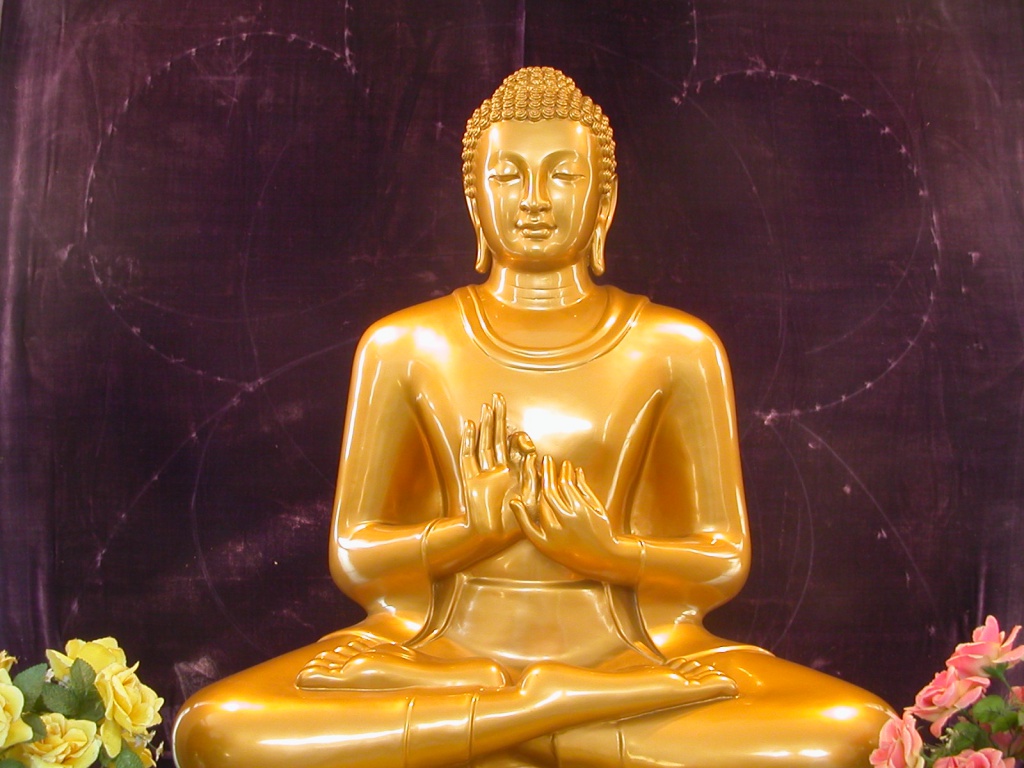
At home, it is common for Buddhists to set aside a room for a shrine wherein an altar is involved along with a statue of Buddha, and symbolic objects including candles, food offerings, flowers and incense burners. As Buddhists do not deem the Buddha to be a God, their worship only involves showing reverence and devotion towards Him and the bodhisattas through meditation and prayer. This helps "believers to develop good mental states, so that they can escape the cycle of rebirth, death and rebirth, and gain enlightenment".
On special occasions such as full moon days or traditional festivals, Buddhists may choose to visit a vihara, which is a Buddhist monastery, open to the community for study, meditation and worship, or a temple, which is a religious building similar to a vihara, in order to worship with others. Buddhist temples, coming in numerous shapes, are designed to symbolise the five elements of fire, air, earth, water, and wisdom. Worship within a temple includes chanting the Three Refuges and Precepts and the scriptures, giving offerings in front of an immage of the Buddha, lighting candles, burning incense, mediating and listening to sermons. Just like worshipping at home, the shrine room is the most important part of a Buddhist temple. It contains one or more Buddharupas.
Before entering any shrine room, as a sign of respect, people are required to take their shoes off in order to keep the floor clean. Moreover, they also dress modestly, often in white in Theravada countries. They bow in front of the Buddharupa, and as it is considered rude to point the soles of one's feet towards someone, they sit with their feet tucked.
Another feature of worship involves visiting burial mounds or shines built to house relics of the Buddha or an important disciple or teacher called stupas. While there, Buddhists often walk around the stupa while reciting a mantra or a prayer, and concentrate on the important of the Buddha in their lives.



Holy Times & Seasons
There are many holidays and festivals celebrated throughout the year by the Buddhist community, most of which commemorate important events in the life of the Buddha or various Bohisattvas.
Buddhist festivals are always joyful occasions. It is common for Buddhists to visit the local temple, and offer food as well as other items to the monks, and listen to a Dharma talk on special days. However, it is also typical for Buddhists to celebrate at home, and they offer food to the Buddha and other Bodhisattvas instead of monks.
As some holy days are specific to particular Buddhist traditions or ethnic groups, there are two aspects that are taken into consideration to determine who celebrates which festivals. Most Buddhists, with the exception of the Japanese, use the Lunar Calendar and the dates of Buddhist festivals only vary between countries and traditions.
The most significant celebration occurs every May on the night of the full moon, when Buddhists all over the world celebrate the birth, enlightenment and death of the Buddha over 2,500 years ago. It is known as the Buddha day or the Vesak. Additionally, a few of the most important days for Buddhists include the Buddhist New Year, Magha Puja, Parinirvana, Losar, Hanna Matsuri, Songkran, Poson Day, Dharma Day, Kathina, Sangha Day, and Bodhi Day.
Buddha
. . .
. . .
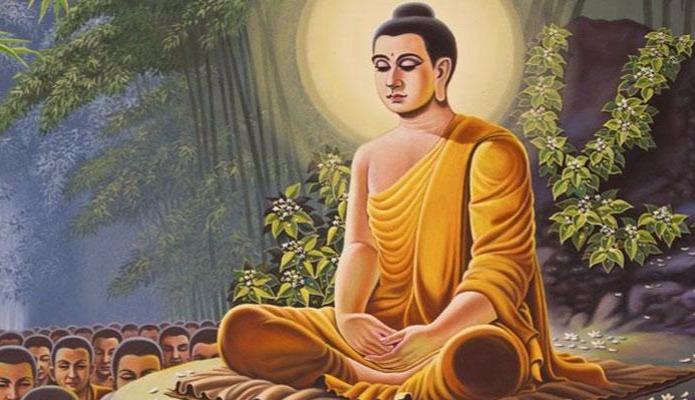
The Buddha was the beginning of Buddhism. "The word 'Buddha' is a title, which means 'one who is awake' — in the sense of having 'woke up to reality'." Around 2,500 years ago, the Buddha was born as Siddhartha Gautama in Nepal. He did not claim to be a god or a prophet. Instead, he was a human being who understood life in the deepest way possible, and became Enlightened. On the Indian-Nepalese border, Siddhartha was born into the royal family of a small kingdom. Despite having a privileged upbringing, he realised the harsh facts of old age, sickness, and death over the course of life, which prompted him to puzzle over the meaning of living. He eventually felt forced to leave his palace in order to "follow the traditional Indian path of the wandering holy man, a seeker of Truth".
For six years, Siddhartha lived an "ascetic" life and partook in its practices. He studied and meditated using the words of various religious teachers as his guide. He practiced his new way of life with a group of five ascetics, and his dedication was so mesmerising to them that they become Siddhartha's followers. However, when answers to his questions did not appear, he redoubled his efforts, enduring pain, fasting nearly to starvation, and refusing water. No matter what he tried, though, Siddhartha was unable to reach the level of satisfaction he sought, until one day, he was offered a bowl of rice by a young girl. As he accepted it, he realised that living under his harsh ways was not helping him achieve spiritual release. When the five ascetics saw that he had eaten his rice, drank his water, and bathed in the river, they decided that Siddhartha had given up the ascetic life and would follow the ways of the flesh, and promptly left him. Siddhartha decided, from then on, to encourage people to follow a path of balance instead of one characterised by extremism. He called this path the Middle Way.
During the remainder of the 80 years that he lived, he traveled and preached the Dharma, which were his teachings, in an effort to lead others to and along the path of elightenment.
. . .
“I can die happily. I have not kept a single teaching hidden in a closed hand. Everything that is useful for you, I have already given. Be your own guiding light.”
— The Buddha, while leaving his body at the age of eighty
Morals of a Buddhist
Buddhists are not required to wear any specific or special clothing, change eating habits, or give up material possessions and social life. They are only required to change their perceptions, how they see things. It is important for Buddhists to not take obstacles in their life too seriously, and for them to see their surroundings are interesting and full of potential. Buddhists gradually change their views of difficulties by understand the teachings of Buddha and using tools such as meditation. Practicing meditation helps Buddhists to adjust to being a state with less disturbing emotions, and more joy and clarity. The perspectives experienced in meditation are eventually brought into daily life.
Buddhism inspires its followers to take responsibility for their own lives, without moralising, by understand cause and effect, which is known as karma. The Buddha teaches in great detail how the future is shaped by a person's thoughts, words and actions. What a human does accumulates good or bad impressions in their mind — karma is not fate.
The Buddha was the first person to attain full enlightenment in recorded history. However, there is no essential difference between the Buddha and his followers. Enlightenment is the ultimate goal in Buddhism.
Samrat Ashoka
"Every religion has the wholesome core of love, compassion and goodwill. the outer shell differs, but give importance to the inner essence and there will be no quarrel."
. . .
Buddhism is a tradition that believes mainly in personal spiritual development and the attainment of a deep insight into the true nature of life. Buddhists follow the path of Buddha, who went on a quest for Enlightenment. Unlike many other religions, followers of Buddhism do not believe or perceive the Buddha as a god. They believe that nothing is fixed or permanent and that change is always possible, and that the path of Enlightenment is through the practice and development of morality, meditation and wisdom. However, despite not believing in a god, their values are similar to other religions. They give importance to "the wholesome core of love, compassion and goodwill".
References
BBC Bitesize - GCSE Religious Studies - Worship - Revision 1. 2017. BBC Bitesize - GCSE Religious Studies - Worship - Revision 1. ONLINE. Available at: https://www.bbc.co.uk/education/guides/zq8qn39/revision/1. [Accessed 13 November 2017].Diamond Way Buddhism. 2017. Who was Buddha? A short life story of Buddha Shakyamuni. ONLINE. Available at: https://www.diamondway-buddhism.org/buddhism/buddha/. [Accessed 15 November 2017].History of Buddhism | About Buddhism. 2017. History of Buddhism | About Buddhism. ONLINE. Available at: http://www.aboutbuddhism.org/history-of-buddhism.htm/. [Accessed 13 November 2017].ReligionFacts. 2017. Buddhist Holidays and Festivals - ReligionFacts. ONLINE. Available at: http://www.religionfacts.com/buddhism/holidays. [Accessed 20 November 2017].What is Buddhism | About Buddhism. 2017. What is Buddhism | About Buddhism. ONLINE. Available at: http://www.aboutbuddhism.org/what-is-buddhism.htm/. [Accessed 14 November 2017].Diamond Way Buddhism. 2017. What is Buddhism? A short introduction for beginners. ONLINE. Available at: https://www.diamondway-buddhism.org/buddhism/#karma. [Accessed 22 November 2017].Who Was the Buddha? | The Buddhist Centre. 2017. Who Was the Buddha? | The Buddhist Centre. ONLINE. Available at: https://thebuddhistcentre.com/text/who-was-buddha. [Accessed 17 November 2017].